The Koschmann lab is studying the molecular mechanisms by which mutations in pediatric High-Grade Glioma and Diffuse Intrinsic Pontine Glioma (DIPG) can be therapeutically targeted. The Koschmann Lab’s work in precision medicine pushes the boundaries of targeted therapies and precision diagnostics for children diagnosed with these brain tumors. Through highly collaborative basic, translational, and clinical research, the Koschmann Lab strives towards improving outcomes and providing hope for children fighting these devastating diseases.


Mechanisms of Therapeutic Response and Resistance in DMG

The Koschmann Lab studies how genetic changes that drive pediatric diffuse midline glioma (DMG) and other high-grade gliomas affect tumor growth and response to treatment. The lab focuses on how alterations in tumor mutations influence tumor biology and why some tumors become resistant to radiation or targeted therapies, including dordaviprone (ONC201) and the PDGFRA inhibitor avapritinib.
Therapeutic targeting of metaoblism in DMG to disrupt epigenetics
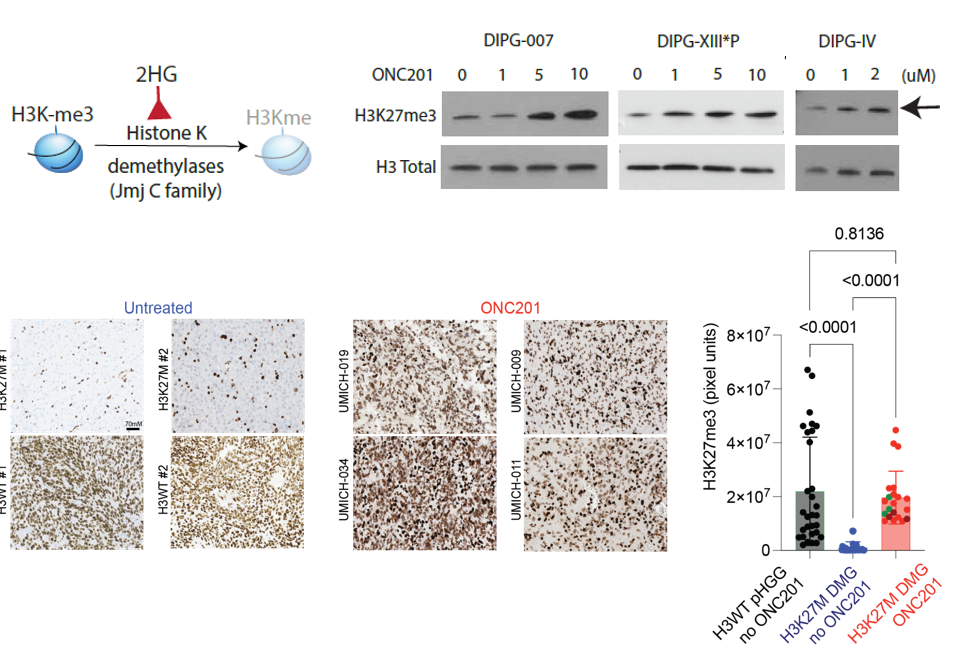
Diffuse midline glioma (DMG) harboring the H3K27M mutation is a devastating pediatric brain tumor with limited effective treatment options. The Koschmann Lab has studied how the imipridone dordaviprone (ONC201) affects DMG at both the clinical and molecular levels, including how treatment disrupts metabolic and epigenetic pathways within tumor cells. ONC201 was FDA approved for recurrent H3K27M-DMG in 2025.
Our ongoing work builds on these findings to understand why some tumors do not respond to ONC201 or eventually develop resistance, with a particular focus on how changes in tumor metabolism may allow cancer cells to survive treatment. By defining these mechanisms of metabolic resistance, we hope to identify new biomarkers of response and develop rational treatment combinations that can make ONC201 more effective and durable.
Therapuetic targeting of PDGFRA and disruption of resistance
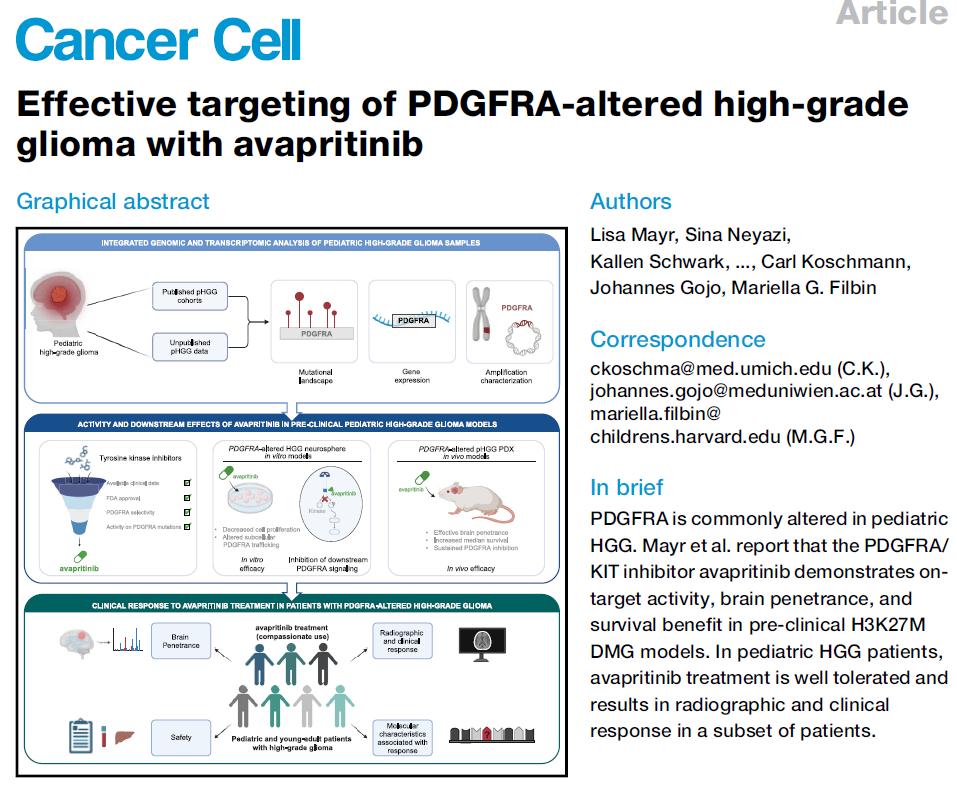
Genomic alterations in PDGFRA are an important driver of pediatric high-grade glioma and DMG, and the Koschmann Lab, in collaboration with colleagues, has studied how PDGFRA signaling promotes tumor growth and can be therapeutically targeted. Our work with the next-generation PDGFRA inhibitor avapritinib demonstrated that it can effectively inhibit PDGFRA-driven signaling, penetrate the central nervous system, and suppress growth in patient-derived glioma models. Early clinical studies further supported the potential of PDGFRA inhibition in patients with PDGFRA-altered glioma.
Building on these findings, the Koschmann Lab is investigating how glioma cells adapt to PDGFRA inhibition and develop therapeutic resistance. In particular, we are studying signaling and metabolic pathways and immune cells in the microenvironment that become activated or upregulated following avapritinib treatment and are testing strategies to therapeutically disrupt these pathways. The goal is to develop rational combination therapies that can prevent or overcome resistance and produce more durable responses in patients with with PDGFRA-driven gliomas.